Germany Work Visa for Nigerians-Who Qualifies
Germany Updates Work Visa Rules for Nigerians
Germany has introduced fresh updates to its work visa system. The country intensifies efforts to attract skilled foreign workers.
For Nigerians seeking legal employment opportunities abroad, these changes clarify rge following;
- Who qualifies
- Which jobs are prioritised, and
- How applicants can move from short-term employment to long-term residence.
As labour shortages continue to affect key sectors, Germany’s labour visa is becoming one of the most reliable entry routes for qualified Nigerians.
Why Germany Is Updating Its Work Visa Rules
Germany’s workforce is shrinking due to an ageing population and low birth rates. At the same time, demand for skilled labour remains high across healthcare, technology, engineering, and skilled trades. As a result, employers are struggling to fill vacancies locally.
To address this gap, German authorities have adjusted work visa policies to make recruitment from non-EU countries faster and more structured. These changes aim to reduce processing delays while maintaining strict verification standards.
Who Can Apply for a Germany Work Visa
For Nigerians, eligibility for a German work visa depends on several key factors. First, applicants must have a valid job offer from a recognised German employer. In addition, the role must match the applicant’s qualifications or professional experience.
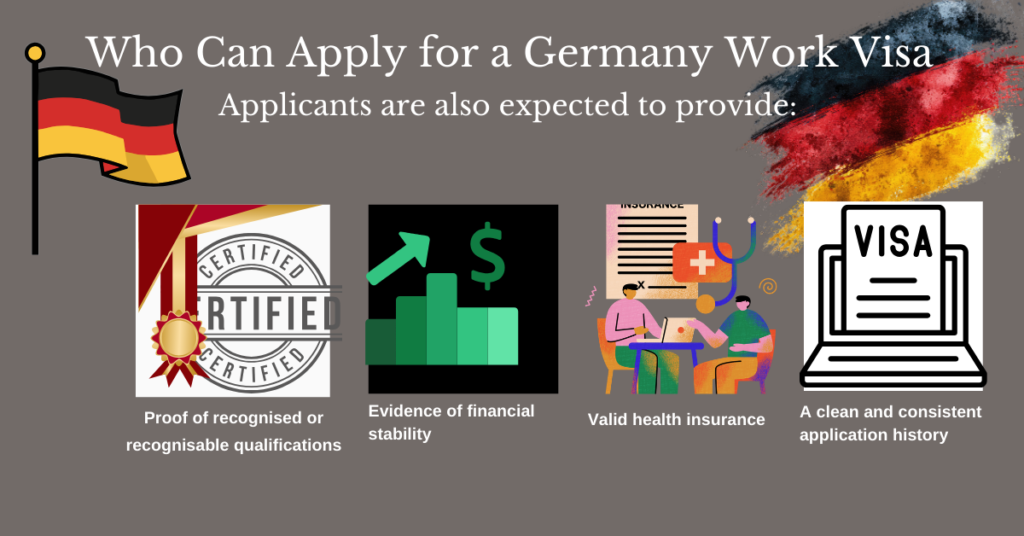
Applicants are also expected to provide:
Proof of recognised or recognisable qualifications
Evidence of financial stability
Valid health insurance
A clean and consistent application history
Unlike visitor visas, work visas are assessed primarily on skill relevance and documentation accuracy.
Jobs That Increase Approval Chances
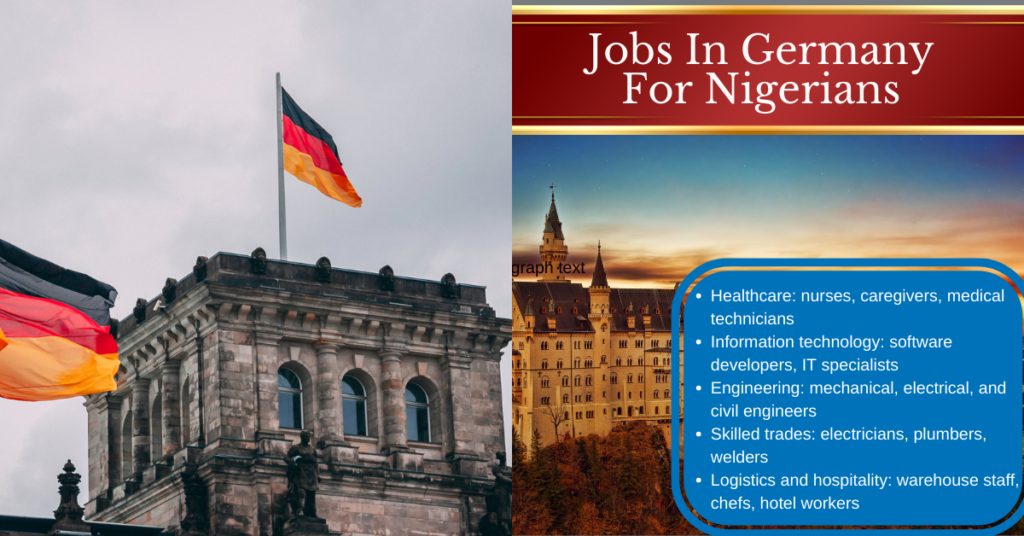
Germany prioritises work visas for occupations experiencing critical shortages. Nigerians with experience in the following sectors are more likely to qualify:
Healthcare: nurses, caregivers, medical technicians
Information technology: software developers, IT specialists
Engineering: mechanical, electrical, and civil engineers
Skilled trades: electricians, plumbers, welders
Logistics and hospitality: warehouse staff, chefs, hotel workers
A signed employment contract significantly improves the chances of approval.
Work Visa Options Available to Nigerians
Germany offers several legal work visa pathways, depending on skill level and salary. These include the standard German work visa for applicants with confirmed jobs and the EU Blue Card for highly skilled professionals who meet salary thresholds.
In addition, newer routes such as the Opportunity Card (Chancenkarte) allow skilled Nigerians to enter Germany to search for jobs. The Recognition Visa also enables applicants to work while completing professional certification.
Each pathway has different requirements but can lead to long-term residence.
Language Requirements and Practical Expectations
Although some international companies operate in English, most German employers expect basic to intermediate German language skills (A2–B1). Regulated professions, especially in healthcare, often require higher proficiency.
Starting language training early improves employability and reduces visa delays.
From Work Visa to Long-Term Residence
One major advantage of Germany’s work visa system is its clear settlement pathway. After meeting employment and residency requirements, Nigerians can apply for extended residence permits and permanent residency. Family reunification may also be available.
This makes the German a long-term migration option rather than a temporary solution.
Important Warnings for Nigerian Applicants
As interest in Germany grows, visa fraud is also increasing. Nigerians are advised to apply only through verified employers and official channels. Agents promising guaranteed visas or fake job offers should be avoided.
Inconsistent documentation can lead to visa refusal or long-term restrictions.
Read more: https://thetravelcliques.com/blog/germany-immigration-for-nigerians-why-people-are-choosing-germany/
https://travelcliquesltd.com/Pages/News.html
Final Takeaway
Germany’s updated work visa system reflects a long-term demand for skilled foreign workers. For Nigerians with relevant skills, proper documentation, and early preparation, the work labour visa remains one of the most realistic and structured routes to legal employment and residence in Europe.